A Day in Santa Cruz
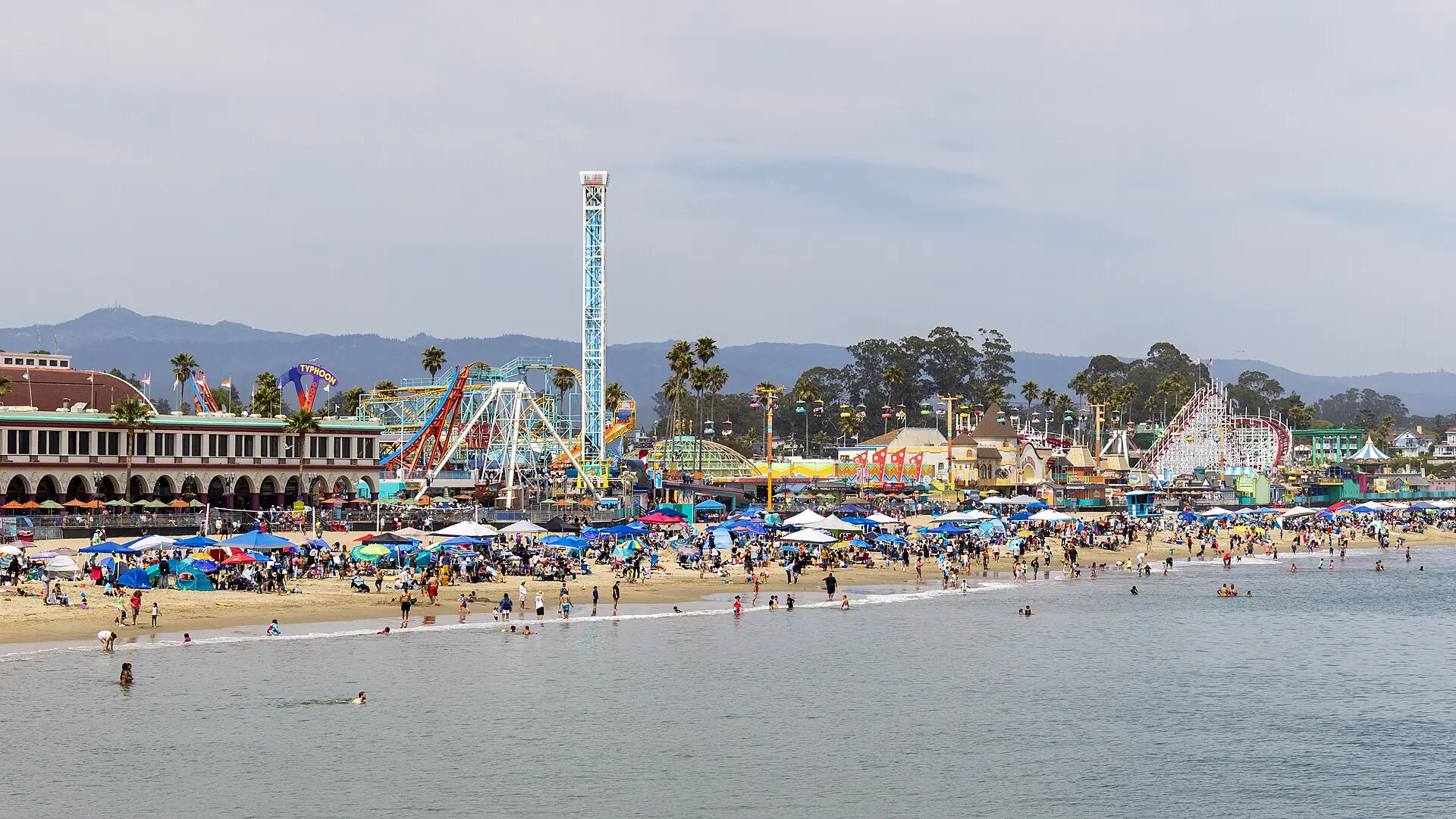
An hour and a half south by one of two roads — the fast ugly one or the slow beautiful one — to a boardwalk running a 1924 wooden coaster, a wharf with sea lions underneath, and butterflies that winter by the bridge.
The short version
- The drive per the alarm runs two personalities: Highway 17’s fast mountain slog (~1.5 hours with traffic’s blessing) or Highway 1’s coastal unspooling past Half Moon Bay and Pescadero — the out-one-back-the-other loop is the standing plan.
- The Beach Boardwalk enters free with rides sold per-ride or by wristband — and the Giant Dipper, the 1924 wooden coaster running as a National Historic Landmark, is the alarm’s one required ticket: fast, rattling, and better than most things built since; hours at beachboardwalk.com.
- The Municipal Wharf drives its planks half a mile into the bay with sea lions hauled out on the crossbeams below — free viewing through the pierced decks, loudest at the far end.
- Surf history is civic history: Hawaiian princes rode redwood boards here in 1885 — the town will tell you, correctly, that this is where mainland surfing began — and the lighthouse’s tiny surfing museum above Steamer Lane watches today’s version break below.
- Natural Bridges State Beach keeps its last standing arch and, October through January, the monarch grove — thousands of wintering butterflies clustering the eucalyptus per the alarm’s season clause, a boardwalk trail, and the parking fee as the whole price.
- West Cliff Drive links lighthouse to bridges in the town’s best walk; the Mystery Spot sells its tilted-shack disorientation with total staff commitment — it is exactly what it is — and downtown’s Pacific Avenue handles the browsing hour.

Getting there
The loop per the alarm is the trip’s design: 17 down for the fast arrival, the 1 home for the coast at golden hour — or reversed for morning fog strategy. Summer weekends stack 17 with beach traffic both directions; early departures beat it. The 1’s reward runs through Pescadero’s farm stands and Davenport’s cliff pull-offs — budget it as scenery, not transit. Parking in town splits between the Boardwalk’s lots and street strategy; the wharf drives on for its own fee.
The day
Boardwalk first while the lines are short: the Giant Dipper’s wooden thunder as the opening argument, Looff carousel’s brass rings for the completists, and the free-entry stroll pricing the rest by appetite. The wharf walk follows — sea lions bellowing under the planks, chowder-in-sourdough at a window counter — then West Cliff Drive’s mile: Steamer Lane’s break watched from the railing, the surfing museum’s ten-minute history, and the monument to those Hawaiian princes getting its nod. The afternoon splits by season: monarchs at Natural Bridges in the winter months per the alarm, tidepools and the arch otherwise, with the Mystery Spot’s committed absurdity or Pacific Avenue’s bookstores as the wildcards. Dinner downtown or tacos on the drive, and Highway 1 runs the sunset leg home.
When to go
Santa Cruz works year-round on different products: summer is full beach-town throttle (Boardwalk daily, crowds included), fall runs warm and clear as the local secret, and October through January adds the monarch grove per the alarm — peak clusters typically around Thanksgiving-to-New-Year cold snaps. Winter surf runs biggest at Steamer Lane for spectating. The Boardwalk trims to weekends off-season; checking its calendar before a winter trip saves the coaster disappointment.
Frequently Asked Questions
Is the Giant Dipper rough?
It’s a 1924 wooden coaster — rattling, quick, and half the charm is the era’s engineering underneath you. Modern-smooth it is not; that’s the ticket’s whole argument. The landmark status holds up by any fair measure of fun per decade.
Where exactly are the sea lions?
Under the Municipal Wharf’s far half — look through the viewing holes cut in the decking or lean the rails. They haul out year-round with numbers swinging by season and swell; the barking finds you before you find them.
What’s the real story with surfing here?
Three Hawaiian princes — students at a nearby military school — surfed the river mouth on milled redwood boards in 1885, the first documented surfing on the U.S. mainland. The plaque at Lighthouse Point and the museum tell it properly; Steamer Lane’s daily lineup keeps it current.
Is the Mystery Spot worth it?
As forty-five minutes of tilted-shack physics and staff showmanship, cheerfully yes for the right mood — it is a gravity-illusion cabin with a gift shop, delivered with complete commitment. Skeptics enjoy it as theater; children enjoy it as fact.
Santa Cruz or Point Reyes from San Francisco?
Point Reyes (documented on this network) for wild coast and the lighthouse stairs; Santa Cruz for boardwalk, surf culture, and butterflies. North for solitude, south for the calliope — the fog forecast is a fair tiebreaker.