Monterey from San Francisco
The bay Steinbeck wrote and the sardines abandoned now runs on a world-standard aquarium and a themed row selling the novel back to you. It’s a long day from San Francisco — done right, it’s a great one.
The short version
- The drive runs 101 south then Highway 1 or 156 into the peninsula — 2.5 hours each way as the realistic planning figure, with the alarm’s 7am departure as the whole strategy.
- The Monterey Bay Aquarium is the anchor and the argument: the kelp forest tank, the sea-otter program, and the open-sea gallery’s sardine cyclones — around $60 on timed online tickets at montereybayaquarium.org, booked per the alarm before you commit the drive.
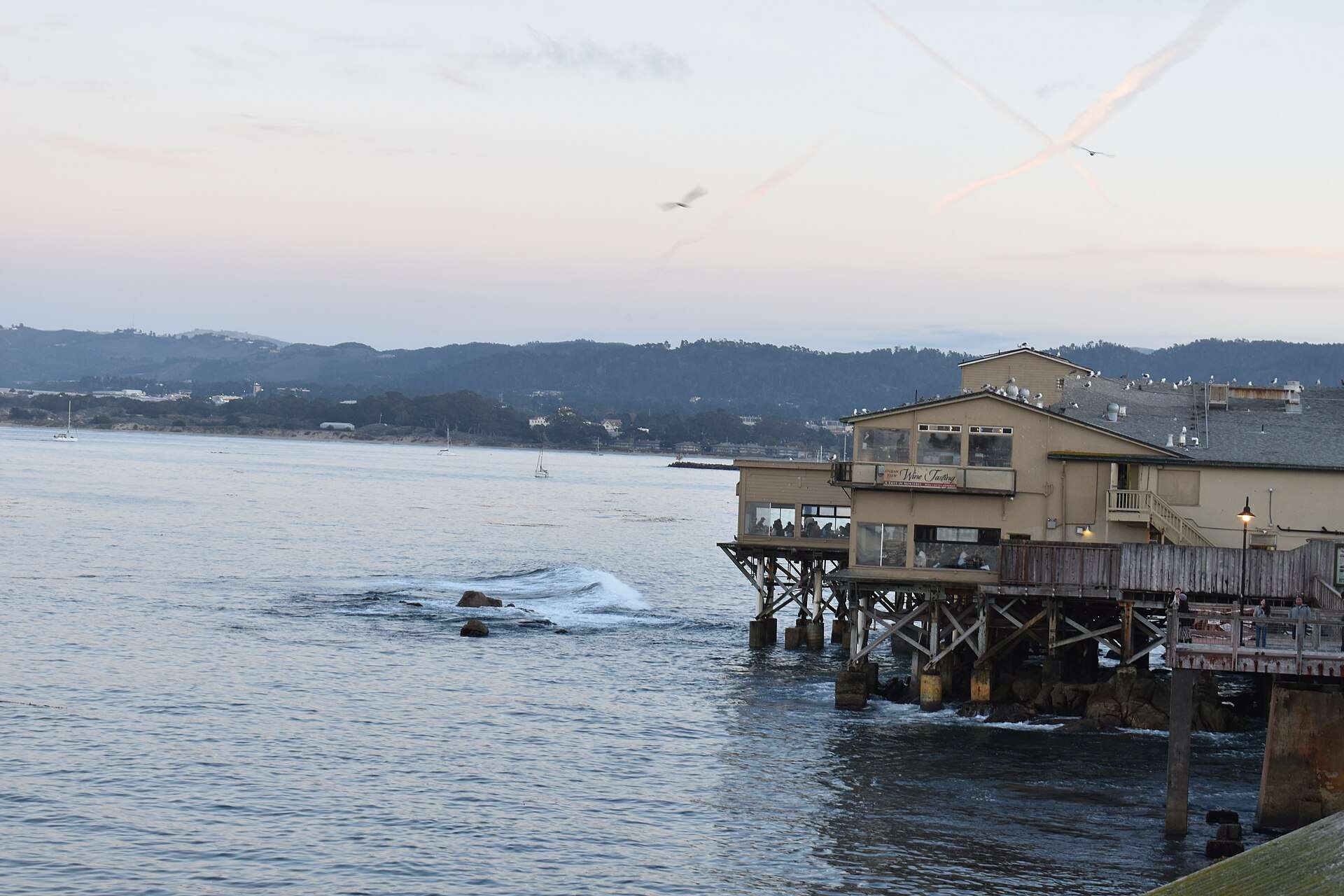
- Cannery Row, stated plainly: the sardine canneries Steinbeck wrote collapsed with the fishery in the 1950s, and the street rebuilt itself as a retail waterfront wearing his title — walk it for the bay views and the history plaques, buy the novel, and calibrate accordingly.
- Point Lobos State Natural Reserve, ten minutes south, is the coast at full value — Cypress Grove’s headlands, China Cove’s turquoise, sea lions on the offshore rocks — with a modest vehicle day fee and lots that fill by late morning; details at parks.ca.gov.
- The 17-Mile Drive’s toll buys Pebble Beach’s coastline and the Lone Cypress — worthwhile on a first visit with time in hand, skippable without shame when Point Lobos holds the same coast for less.
- Whales work the bay year-round — grays in winter-spring migration, humpbacks summer-fall — and the wharf’s cruise operators run the watching on 2.5-to-3-hour sailings that reshape the day’s math if added.

Getting there
The 7am departure clears the city before the bridge metering and lands the aquarium’s opening window — the alarm’s arithmetic in one move. Highway 156’s Castroville artichoke fields announce the peninsula; parking garages behind Cannery Row solve the car for the day at flat rates. The return’s workable window is 5–6pm departure for a 8–9pm city arrival — Sunday evenings add the 101’s full northbound tax. Carless versions exist by bus-and-train assembly and consume the day in transit; this trip is a drive.
The day
Aquarium at opening, per the booked slot: the kelp forest’s feeding shows, the otters’ scheduled charisma, and the open-sea gallery where the tuna and sardines run their silver weather — three hours passes without effort, and the back decks’ wild harbor seals blur the exhibit line. Lunch on the Row with the bay in view, taken with the alarm’s calibration: the street is what it is, the water is why you’re here, and the recreation trail toward Lovers Point walks off the chowder. Then Point Lobos for the afternoon’s real coast — Cypress Grove and Sea Lion Point trails cover the essentials in two unhurried hours, China Cove’s overlook for the color photograph. The 17-Mile Drive or a Carmel hour slots only if the clock genuinely allows; the drive home wants you fed and fueled before the 156 merge.
When to go
September through November is the peninsula’s clear season — the summer fog machine idles, the light goes long, and the aquarium’s crowds thin post-Labor Day. Summer runs foggy mornings and full parking; winter brings storm-watching drama and the gray-whale parade offshore. The aquarium sells out holiday weeks and summer weekends — the alarm’s book-first rule is structural, not cautious. Point Lobos fills its lots by 11 on any nice weekend; the day’s sequencing already handles it.
Frequently Asked Questions
Is the aquarium really worth $60?
It’s the best aquarium in the country by most serious measures — conservation-led, bay-fed, and built where the science happens. Three hours minimum justifies the ticket; rushing it wastes the money and the drive both.
What’s the actual Cannery Row story?
Sardines built the world’s largest cannery strip; overfishing emptied the bay by the 1950s and the industry died. Steinbeck’s 1945 novel froze the working street in amber just before the collapse. Today’s Row retails the memory — enjoyable as waterfront, clear-eyed only if you know the plot.
Monterey or Point Reyes for the SF nature day?
Point Reyes (documented on this network) is closer, wilder, and free; Monterey adds the aquarium and Steinbeck country at double the drive. Aquarium-motivated travelers come here; pure-coast days stay north.
Should I add Carmel or Big Sur?
Carmel’s village hour fits a well-run day; Big Sur does not — the coast road south wants its own dawn start and this network’s honesty about it. The classic error is promising both; the standing fix is the overnight.
When are the whales?
Always, in rotation: grays December–April on migration, humpbacks April–November feeding, orcas as the wildcard. The cruises run near-year-round from the wharf — adding one converts the trip to an 12-hour day, which the day’s math should acknowledge before booking.